

Art is not only a reflection of culture; it is a reflection of the times we live in within history. Artists and the materials they use are a reflection of the history and the moment that we celebrate. They influence the public imagination and experiment with new forms that inform how the next generation views our perspective on today’s moments. There’s a growing movement toward disposable/recyclable art: artwork designed with a finite life beyond display. Yet a key question keeps emerging. If recycled or recyclable materials go into the creation of art, how do we ensure that the artwork itself also leaves the same as it was found? Can we enjoy art today, dispose of it tomorrow and still leave the world as we found it?
It is important that as part of our exploration about what is art that we also explore the components of what make art, well art. There is a commodity, industrial, commercial side of the art world of suppliers, materials, and waste disposal that is a part of the art community and often overlooked. Exploring the entire commercial side of the art world is not something that could be done in a single thought or a single piece, instead we want to explore just one aspect: The waste disposal stream of the art world. What does it look like? What materials matter? Where do you dispose them as an artist working in this part of the world? Answering these questions gives us insight on how to be artists that are participating in this community as consummate professionals.
What is Easy Disposable/Recyclable Art?
Definition and Examples of Recyclable/Disposable Art
Recyclable art refers to creative works made using materials that can be readily reused, repurposed, or returned into the recycling stream rather than thrown away. It includes: Sculptures from aluminum cans, murals painted on reclaimed cardboard, mixed media installations made from newspaper, fabric scraps, or glass, temporary public art, designed to fully biodegrade. It’s more than simply avoiding waste. It’s a design principle: start with the end in mind.
Materials Commonly Used in Recyclable/Disposable Art
Artists often select materials that are already widely recycled, including: Paint products, paper products, shipping box cardboard, metals like aluminum, tin, or steel, glass bottles and shards, reusable plastics, clothing fibers like cotton or jute, compostable substrates, old technology media (e.g., CD, tapes, video tapes, etc.). Some artists go further by sourcing exclusively from post-consumer waste or discarded manufacturing scraps. Whatever is chosen is considered recycled the moment it re-used by the artist! It is re-used again when that artist disposes of it!
Can All Art be Disposed of Properly?
The short answer is yes all art and art materials can be disposed of properly and with minimal damage to the world. The art world can work within the same waste and recyclable stream as all other enterprises and there is no reason that art cannot be broken down into its components that allow for proper disposal.
There is certainly a difference between different disposal methods. Some disposal methods involve using facilitates that handle the disposal of electronic waste leftover from the artistic process or electronic upcycled art, like c d recycling facilities. Those are great for that specific type of e-waste art media that is unique and hard to get rid of with a dumpster rental service for art leftover waste.
Others in the waste disposal chain will provide the machines necessary for disposing of art materials, like an acetone recycling machine for getting rid of those vey toxic solvents left over creating a large painting or painted installation.
And, at the end of the day, if there is no standard disposal method or machine available for art disposal or artistic material disposal, there is always getting a quote from a number of local roll off dumpster services to get rid of a large quantity of left over art materials or pieces that never sold.
Why is Proper Disposal Important?
Even well-intentioned art can harm the planet. A painted canvas wrapped in plastic packaging that eventually ends up in a landfill is still waste. A collection of found-media art pieces can leave harmful chemicals in waterways or landfills. The list goes on and on how recycled art or even new art can hurt the delicate ecology of the planet. As artists, we have the same responsibility to care about the impact of what we create as all other parts of the world and communities we live in.
Environmental Impact
Millions of pounds of creative materials are discarded every year: dried paints, synthetic fabrics, PVC decorations, adhesives that prevent recycling. When art and art materials reach the end of its cycle, what’s left behind. Improper disposal can release: Microplastics, toxic solvents, heavy metals from pigments, greenhouse gases as materials decompose. These enter the soil, the air, and the water and eventually find our ways into our body. Art isn’t exempt from waste guilt. Good disposal practices (like those used by a local roll off dumpster services) reduce the long-term footprint of creative expression (and the history that we tell from our creative expression as a society), ensuring that the joy art brings isn’t overshadowed by harm it causes later.
Promoting Eco-Friendly Practices by Artists Means Eco-Friendly Practices for All
Artists are commonly considered influencers of history (as stated above). Thus, art influences behavior from the wider community in which it lives. When artists recycle, they model what stewardship can look like while proving proper waste disposal isn’t a barrier to beauty of what is created. Artists setting the example can be influence that changes the culture of the community and moves the ball forward for the rest of the world.
How to Properly Dispose of Art and Art Materials
As we’ve shared above, art and art materials means interacting with media that can be toxic and must be disposed of properly. The same rules that apply to household recycling apply to art: Remove adhesives when possible, clean paint residue off recyclable surfaces, separate glass by color and plastic by category, detach mixed-material components, and be sure to use a proper recycling or disposal system based on the substrate that is being used (for example, if you’re disposing of left over concrete from a large sculpture, be sure to use a concrete disposal firm that understands how to handle that material and protect against toxic elements of concrete getting into the water system).
Local Recycling Guidelines
Recycling varies wildly from city to city. Check:
- What materials are accepted? Do they accept all materials? Do they accept them only in a certain way?
- Do they offer drop-off for oversized pieces?
- Are there special programs or grants for artists (especially for those that do not have a consistent income)?
- Some art centers and maker spaces offer dedicated recycling and reuse programs by contracting with a local dumpster rentals company.
Reuse and Upcycling Options
Before tossing, consider:
- Donate the artwork or leftover art materials to schools or nonprofits. Please note that most of these programs will only accept unopened or unused materials.
- Rework pieces into new creations or re-use materials in a new piece.
- Break down materials into future supplies (this does require storage, so please note that!)
- Offer art as raw materials to other creators (check your local free group!)
- Art doesn’t have to end. It can evolve.
Where to Properly Dispose of Art and Artistic Materials? Big Art, Big Solutions: Roll-Off Dumpsters
Some art is too large for a standard garbage bin. Installations, multi-panel canvases, and set designs from theater productions to name a few. This is where a roll off dumpster becomes an excellent tool. Roll-off dumpsters are available in various sizes and are delivered directly to your location. Artists working with community mural projects, temporary architectural art, or large sculptures often use a local dumpster rental during takedown. That means that even during disposal, the ethos of disposing properly remains intact.
Recyclable art isn’t just a movement or a fad; it is part of our stewardship as artists. Exploring new mediums, thinking creatively about endings, and embracing materials that regenerate is part of how we tell the story that art is part of the changing moment in time. Proper disposal and recycling when possible are what makes us consummate actors in our communities and shows that artists lead the way, not turn away.
Where to Properly Dispose of Art and Artistic Materials? Safe Disposal for Paints and Chemicals
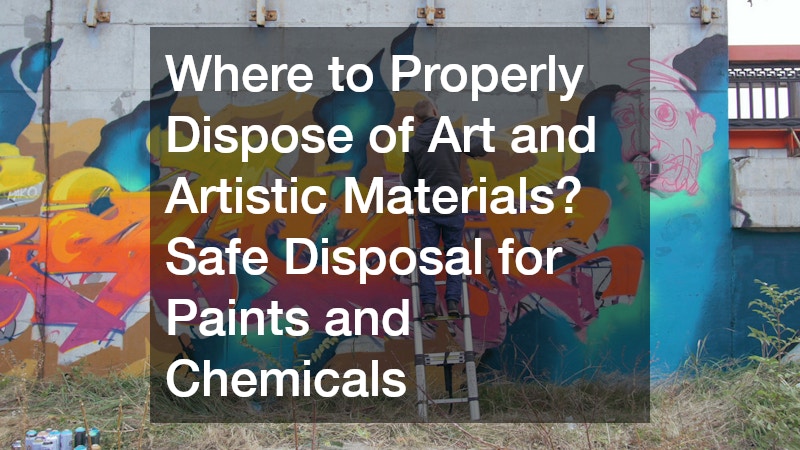
Not all artistic leftovers are landfill-friendly. Solvents, spray paints, oil paints, varnishes, and resin components can be hazardous in landfills. Search for Household Hazardous Waste (HHW) facilities in your area. Unused paint can sometimes head to community swap programs, schools, or theater departments. Others should be disposed by a company that is certified to dispose of that waste properly.
Where to Properly Dispose of Art and Artistic Materials? Safe Disposal for Metals and Metallics
When it comes to disposing of metals and metallic art materials responsibly, metal recyclers are the go-to solution for artists. From aluminum frames and steel sculptures to copper wire and tin scraps, metal recyclers specialize in reclaiming these materials so they can be melted down and repurposed into new products. Unlike general waste services, metal recyclers ensure that valuable metals reenter the production cycle instead of sitting in landfills for decades. Many recycling facilities will even pay for clean, separated metals, making this both an environmentally and financially smart option for artists managing leftover materials. Before bringing items to a recycler, remove any non-metal components such as screws, adhesives, or paint coatings to keep the load pure and process-efficient. Partnering with a local metal recycler is one of the most effective ways for artists to align their creative process with sustainable disposal practices.
Do Artists Have a Voice in Proper Disposal of Artistic Works and Artistic Materials?
Art has always been a witness to its era, capturing our values, struggles, and aspirations. Today, one of the most urgent truths of our time is that everything we create has an impact beyond its immediate beauty. Artists have a unique opportunity to respond to this moment by embracing mindful disposal practices and material choices that respect the world that inspires us and be the inspiration of how we dispose of the art and artistic materials as well.
Proper disposal of art and its materials is not separate from the creative process. It is the final brushstroke, the last deliberate act that ensures the piece has lived responsibly from start to finish. Whether that means breaking down mixed media for recycling, donating unused supplies, taking hazardous materials to local HHW facilities, or using a dumpster rental service to handle the deconstruction of large installations, each choice reflects care and professionalism.
As we continue to explore recyclable and disposable art, we recognize that environmental stewardship is not a limitation but a design principle. It invites artists to think differently, to create with foresight, and to influence the wider community by modeling sustainable habits. When we choose materials that can be reused or safely returned to the waste stream, we protect not only our craft but the future landscapes that will shape the next generation of creatives.
Disposing of art as thoughtfully as we create it is an honor we bestow on the planet that gives us a story to tell past the art. Sustainable art practices reinforce what artists have always known: beauty and responsibility are not opposing forces. They are part of the same masterpiece.




No Comment